
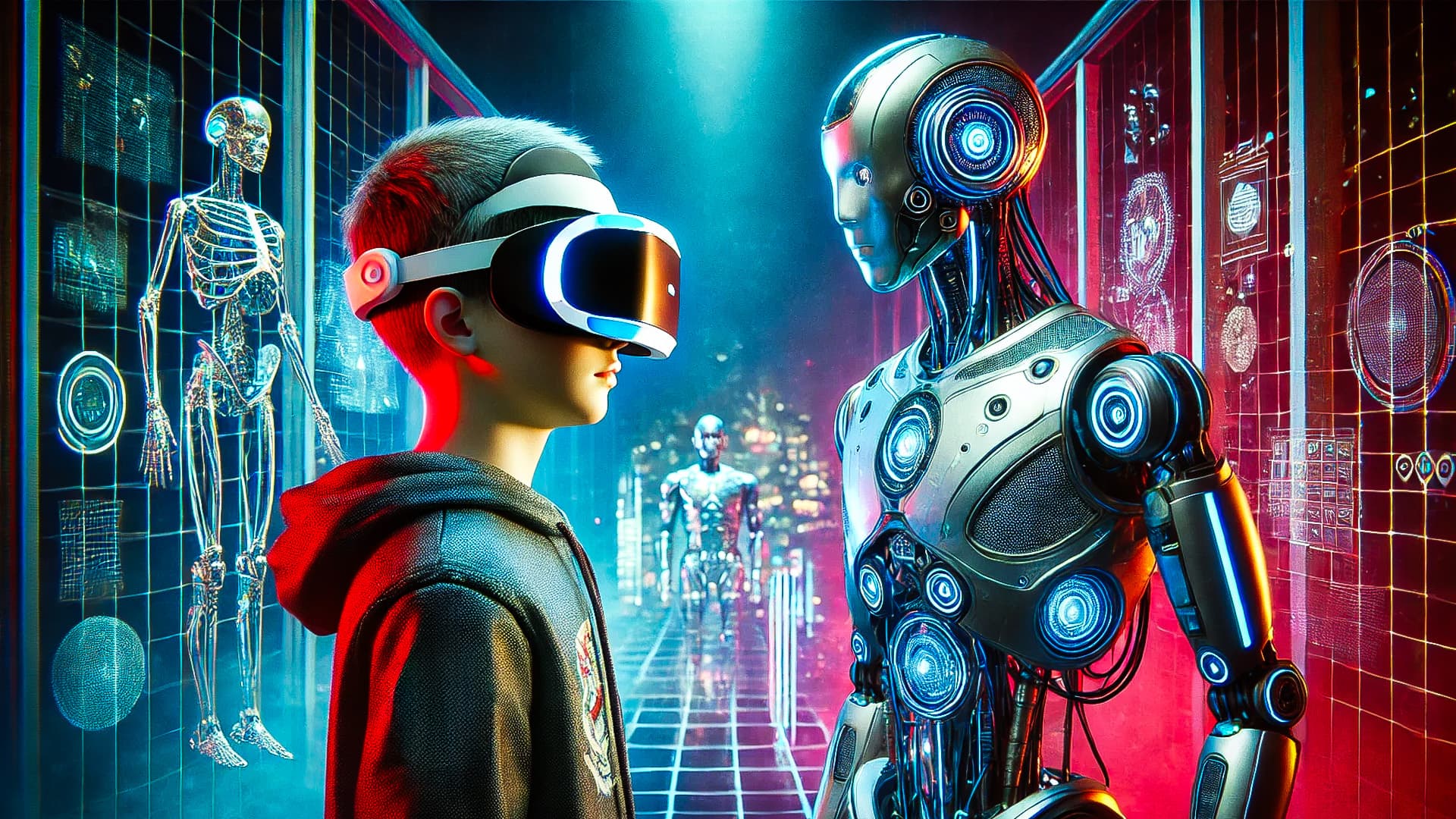
The Metaverse represents the next epoch of digital evolution, a boundless virtual cosmos where reality and imagination converge. As this nascent digital universe expands, the role of artificial intelligence (AI) becomes increasingly pivotal. AI, the digital lifeblood of the Metaverse, enables the creation of interactive, intelligent, and immersive experiences that were once the stuff of science fiction. Together, AI and the Metaverse are not just shaping the future of technology but are redefining the essence of human interaction and experience in virtual spaces.
Understanding the Metaverse: A New Digital Frontier
What is the Metaverse?
The Metaverse, at its core, is a collective virtual shared space, a digital environment that exists parallel to our physical world. It is an expansive universe where individuals can interact with each other and digital objects in real-time. Unlike the internet of today, which is primarily accessed through screens, the Metaverse is a fully immersive experience, often facilitated through virtual reality (VR) and augmented reality (AR) technologies. It is a space where the boundaries between the physical and the digital blur, creating a seamless interface between the real and the virtual. The Metaverse is not a single entity but a confluence of multiple digital realms, where users can explore, socialize, work, and create, all within a unified, persistent digital ecosystem.
Evolution of Virtual Worlds
The concept of virtual worlds is not new; it has evolved significantly over the decades. Early iterations of virtual environments, such as text-based multi-user dungeons (MUDs) in the 1980s, laid the groundwork for the expansive digital landscapes we see today. As technology advanced, so did the complexity and accessibility of these virtual spaces. The emergence of graphical user interfaces (GUIs) in the 1990s gave rise to more visually rich environments like Second Life, where users could create avatars, build virtual businesses, and engage in social interactions. These early platforms were precursors to the Metaverse, each contributing to the development of more sophisticated and immersive virtual experiences. Today, the Metaverse represents the culmination of these advancements, offering an interconnected network of virtual worlds that are richer, more interactive, and more immersive than ever before.
Why AI is Essential to the Metaverse
Artificial intelligence is the cornerstone of the Metaverse, infusing it with the dynamism and intelligence required to create truly interactive and responsive virtual worlds. AI enables the Metaverse to be more than just a static environment; it becomes a living, breathing ecosystem that can adapt and evolve in real-time. Through AI, virtual worlds can be populated with intelligent avatars and non-playable characters (NPCs) that exhibit realistic behaviors, respond to user interactions, and even learn from their experiences. Moreover, AI drives the procedural generation of vast virtual landscapes, ensuring that these environments are not only expansive but also diverse and ever-changing. Without AI, the Metaverse would be a hollow shell, devoid of the depth, complexity, and realism that make it a compelling space for users.
AI as the Brain of Virtual Worlds
Intelligent Avatars and NPCs
In the Metaverse, avatars and NPCs are not mere digital representations; they are entities imbued with intelligence and personality, thanks to AI. These virtual beings can engage in complex interactions, adapt their behavior based on user input, and even evolve over time. AI algorithms enable these characters to exhibit human-like traits, such as empathy, humor, and creativity, making interactions within the Metaverse more authentic and engaging. NPCs, powered by AI, can serve as guides, companions, or even adversaries, creating a dynamic and immersive experience for users. These intelligent characters are crucial in making the Metaverse a vibrant and interactive space, where every interaction feels meaningful and personalized.
Adaptive Environments
One of the most transformative aspects of AI in the Metaverse is its ability to create adaptive environments. These environments are not static; they change and evolve based on user interactions, preferences, and behaviors. For instance, AI can modify the landscape of a virtual world in real-time, generating new terrains, structures, and scenarios that respond to the actions of the users. This level of adaptability ensures that the Metaverse remains a fresh and engaging experience, where no two sessions are ever the same. Whether it's altering the weather, shifting the time of day, or introducing new challenges, AI-driven adaptive environments keep the Metaverse dynamic and ever-evolving, offering endless possibilities for exploration and interaction.
Personalization and User Experience
Personalization is at the heart of the Metaverse experience, and AI is the engine that drives it. By analyzing user data and behavior, AI can tailor virtual experiences to individual preferences, creating a highly personalized environment that resonates with each user. This can range from customizing the appearance of avatars and environments to curating content and activities that align with the user's interests and goals. AI also enhances the overall user experience by streamlining interactions, anticipating needs, and providing recommendations that enhance engagement and satisfaction. In the Metaverse, every experience is unique, crafted by AI to reflect the desires and preferences of the individual, ensuring a deeply immersive and personal journey through the virtual world.

AI-Driven Content Creation in the Metaverse
Automated World Building
The scale and complexity of the Metaverse require a level of content creation that is beyond the capabilities of human developers alone. This is where AI-driven automated world building comes into play. AI algorithms can generate vast, intricate virtual worlds with minimal human input, using procedural generation techniques to create landscapes, structures, and ecosystems that are rich in detail and diversity. These AI-generated worlds can be tailored to specific themes or purposes, ensuring that they align with the needs and desires of the users. Automated world building not only accelerates the creation of new content in the Metaverse but also ensures that these environments are continually evolving and expanding, offering endless opportunities for exploration and discovery.
Procedural Generation and AI
Procedural generation is a technique that uses algorithms to create content on the fly, and AI is the driving force behind this process in the Metaverse. By leveraging AI, developers can create complex and dynamic environments that are generated in real-time, based on user interactions and preferences. This allows for the creation of unique and unpredictable experiences, where the environment itself is a living entity that reacts to the actions of the users. Whether it's generating a dense forest, a bustling cityscape, or a serene ocean, AI-driven procedural generation ensures that the Metaverse is a rich and varied space, full of surprises and opportunities for exploration. This level of dynamism is essential for keeping users engaged and immersed in the virtual world.
User-Generated Content and AI Assistance
User-generated content is a cornerstone of the Metaverse, allowing individuals to contribute to the creation and evolution of virtual worlds. However, creating content in such a complex environment can be challenging, especially for those without technical expertise. This is where AI assistance comes in, providing users with tools and guidance to help them create and share their own content within the Metaverse. AI can assist with everything from designing environments and avatars to scripting interactions and events, making content creation more accessible and intuitive. By empowering users to become creators, AI ensures that the Metaverse remains a vibrant and diverse space, shaped by the collective creativity of its inhabitants.
Enhancing Social Interactions with AI
AI-Powered Communication Tools
In the Metaverse, communication is key to building connections and fostering a sense of community. AI-powered communication tools are revolutionizing the way users interact with each other in virtual spaces. These tools can translate languages in real-time, allowing for seamless communication between individuals from different parts of the world. AI can also enhance voice and text communication, making conversations more natural and intuitive by predicting responses, suggesting topics, and even mimicking speech patterns to create more lifelike interactions. These advanced communication tools are essential for creating a sense of presence and connection in the Metaverse, where users can interact as if they were in the same physical space, regardless of geographical distance.
Managing Virtual Economies
Virtual economies are a fundamental aspect of the Metaverse, and AI plays a crucial role in managing and balancing these digital marketplaces. AI algorithms can monitor economic activity, adjust prices, and manage the supply and demand of virtual goods and services, ensuring a stable and thriving economy within the Metaverse. Additionally, AI can help prevent fraud and exploitation by detecting suspicious activities and implementing safeguards to protect users and their assets. By maintaining a fair and balanced virtual economy, AI ensures that the Metaverse remains a sustainable and equitable environment where users can engage in commerce and trade with confidence.
AI in Moderation and Safety
As the Metaverse grows, so does the need for effective moderation and safety measures to protect users from harmful content and behavior. AI is at the forefront of these efforts, using advanced algorithms to detect and prevent inappropriate or dangerous activities in real-time. AI can monitor interactions, flag content that violates community guidelines, and take action to remove harmful material or ban offending users. This level of automated moderation is essential for maintaining a safe and welcoming environment in the Metaverse, where users can explore, interact, and create without fear of harassment or abuse. By ensuring a positive and secure experience for all, AI helps build trust and confidence in the Metaverse as a place for social interaction and collaboration.

AI and the Future of Work in the Metaverse
Virtual Workspaces
The Metaverse is poised to revolutionize the way we work, and AI is a driving force behind this transformation. Virtual workspaces, powered by AI, offer a new paradigm for collaboration and productivity, where teams can work together in immersive digital environments, regardless of physical location. These AI-driven workspaces are more than just virtual meeting rooms; they are dynamic environments that adapt to the needs of the users, providing tools and resources that enhance creativity and efficiency. AI can automate routine tasks, manage workflows, and even facilitate brainstorming sessions, making virtual workspaces a powerful tool for remote and distributed teams. As the line between the physical and digital worlds continues to blur, AI-powered virtual workspaces will become an integral part of the future of work, offering new possibilities for collaboration and innovation.
AI-Driven Productivity Tools
Productivity is at the heart of any successful workplace, and AI-driven tools are transforming how we approach work in the Metaverse. From project management software that uses AI to optimize schedules and resources to virtual assistants that can automate administrative tasks, these tools are designed to enhance efficiency and productivity in virtual workspaces. AI can also analyze data and provide insights that help teams make informed decisions, identify trends, and optimize performance. By leveraging AI-driven productivity tools, businesses can unlock new levels of efficiency and innovation, making the Metaverse a hub for creative and effective work.
Redefining Collaboration and Creativity
The Metaverse offers a new canvas for collaboration and creativity, and AI is helping to redefine how we work together in these digital spaces. AI can facilitate collaboration by connecting individuals with complementary skills, suggesting ideas, and even generating creative content. In virtual workspaces, AI can act as a catalyst for innovation, providing tools and resources that enable teams to experiment, iterate, and create in ways that were previously unimaginable. By breaking down the barriers of distance and time, AI is enabling a new era of collaboration and creativity, where individuals can work together to solve complex problems, create groundbreaking innovations, and push the boundaries of what is possible in the Metaverse.
Ethical Considerations of AI in the Metaverse
Privacy and Data Security
As AI becomes more integrated into the Metaverse, concerns around privacy and data security are becoming increasingly important. AI systems in the Metaverse rely on vast amounts of data to function effectively, raising questions about how this data is collected, stored, and used. Ensuring that users' personal information is protected and that AI systems operate transparently is crucial to maintaining trust in the Metaverse. Additionally, AI must be designed to respect users' privacy, with safeguards in place to prevent unauthorized access to sensitive information. As the Metaverse continues to grow, addressing these ethical concerns will be essential to creating a safe and secure digital environment where users can interact with confidence.
Bias and Fairness in AI Algorithms
AI algorithms have the potential to shape every aspect of the Metaverse, from the environments we explore to the interactions we have. However, these algorithms are not immune to bias, and ensuring that AI operates fairly and inclusively is a significant challenge. Bias in AI can lead to discrimination, exclusion, and unfair treatment of certain groups, undermining the equity and inclusivity of the Metaverse. To address this, developers must ensure that AI systems are designed and trained with diverse data sets, and that they are regularly audited for bias and fairness. By promoting fairness and inclusivity in AI, we can create a Metaverse that is accessible and welcoming to all, regardless of background or identity.
AI Governance and Regulation
The rapid development of AI in the Metaverse raises important questions about governance and regulation. As AI becomes more powerful and pervasive, there is a growing need for policies and frameworks that ensure it is used responsibly and ethically. This includes establishing guidelines for the development and deployment of AI systems, as well as creating mechanisms for oversight and accountability. Effective AI governance will require collaboration between governments, industry, and civil society, with the goal of ensuring that AI in the Metaverse is used in ways that benefit society as a whole. By putting in place robust regulatory frameworks, we can harness the potential of AI while minimizing its risks, ensuring that the Metaverse remains a positive and transformative space for all.

The Road Ahead: AI's Long-Term Impact on the Metaverse
Predictions for AI's Role in the Metaverse
As we look to the future, it is clear that AI will continue to play a central role in the development and evolution of the Metaverse. AI will become increasingly sophisticated, enabling the creation of even more immersive and interactive virtual environments. We can expect AI to drive innovations in areas such as virtual reality, augmented reality, and mixed reality, blurring the lines between the physical and digital worlds even further. Additionally, AI will likely play a key role in the development of new business models and economic systems within the Metaverse, creating new opportunities for commerce and trade. As AI continues to evolve, its impact on the Metaverse will only grow, shaping the future of digital interaction in ways we can only begin to imagine.
Challenges and Opportunities
The integration of AI into the Metaverse presents both challenges and opportunities. On one hand, AI has the potential to create incredibly rich and immersive virtual experiences, revolutionizing how we interact with digital worlds. On the other hand, the use of AI in the Metaverse raises significant ethical, social, and technical challenges that must be addressed. These include issues related to privacy, bias, and governance, as well as the potential for AI to be used in ways that are harmful or exploitative. However, by addressing these challenges head-on, we can unlock the full potential of AI in the Metaverse, creating a digital ecosystem that is innovative, inclusive, and sustainable.
The Future of Human-AI Collaboration
As AI becomes more integrated into the Metaverse, the relationship between humans and AI will continue to evolve. Rather than being mere tools, AI systems will become collaborators, working alongside humans to create, explore, and innovate in virtual spaces. This co-evolution of human and AI creativity will open up new possibilities for collaboration, allowing us to achieve things that were previously unimaginable. By embracing this future, we can create a Metaverse where humans and AI work together in harmony, pushing the boundaries of what is possible and creating a digital world that is richer, more vibrant, and more inclusive for all.

Ais Long Term Impact On The Metaverse
Elisha Roodt
Specializing in virtual reality solutions and immersive technologies, delivering cutting-edge experiences while sharing the latest news, insights, and developments shaping the VR industry.